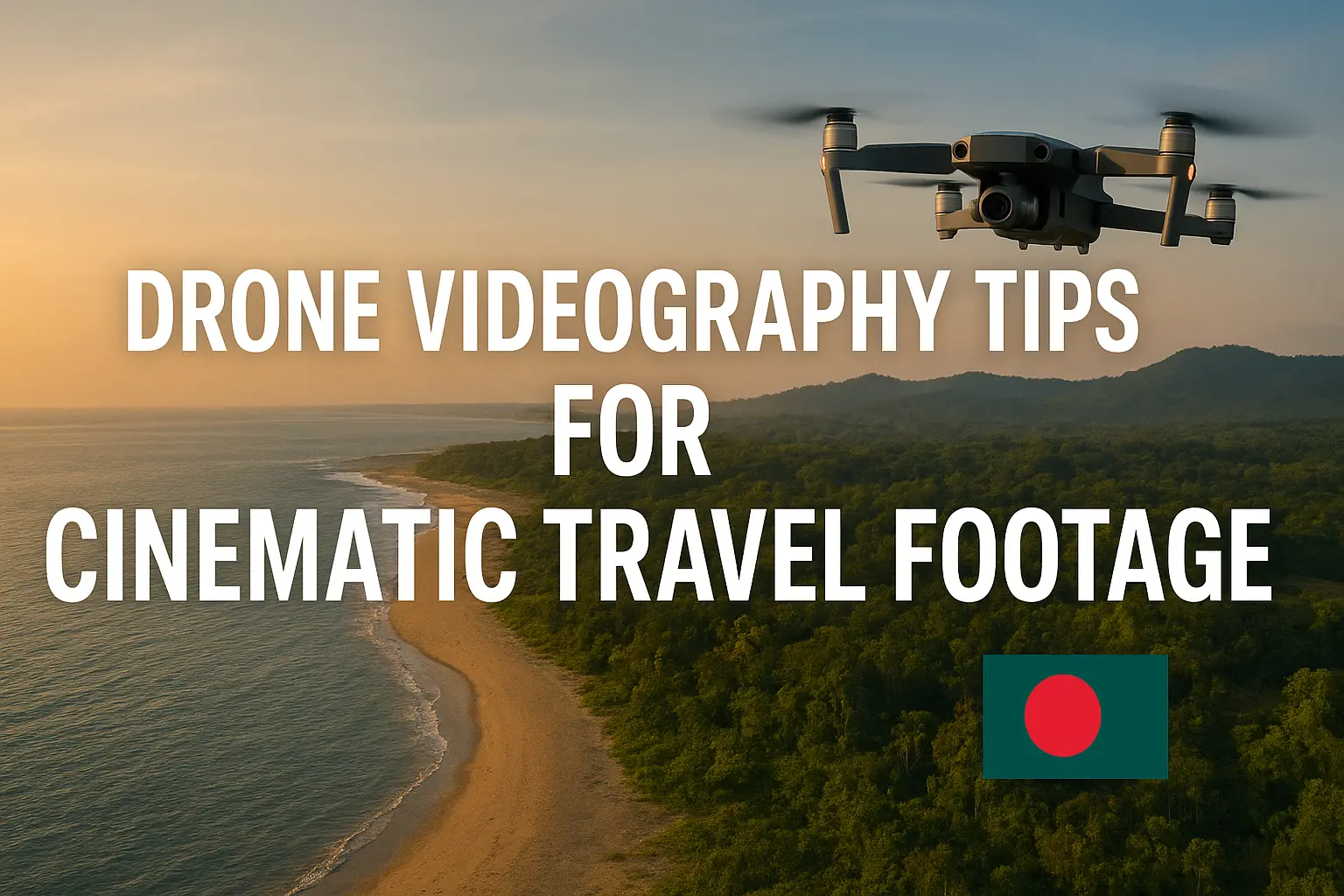
Discover Expert Drone Videography Tips to capture stunning cinematic travel footage in Bangladesh. Drone videography has transformed the way we capture travel moments. Whether it’s the golden sands of Cox’s Bazar, the tea gardens of Sylhet, or the mountain trails of Sajek, drones allow Bangladeshi travelers and filmmakers to record breathtaking aerial views like never before. But capturing cinematic footage takes more than just flying a drone — it’s about creative storytelling, smooth motion, and technical control.
In this guide, we’ll explore essential Drone Videography Tips that will help you shoot professional-quality cinematic travel videos anywhere in Bangladesh.
1. Plan Your Shots Before Takeoff
Great drone footage begins with proper planning. Before heading out, research your location on Google Earth or Maps to identify potential aerial angles. Think about the story you want to tell — a sunrise over Saint Martin’s Island or a boat crossing the Padma River.
Pro tip: Create a short shot list (wide establishing shots, tracking shots, top-down views) so you don’t miss any key moments once you’re in the air.
2. Shoot During Golden Hour
Lighting is everything in cinematic videography. The golden hour — just after sunrise and before sunset — offers soft, warm tones and long shadows that enhance depth and emotion in your footage.
Midday light in Bangladesh can be harsh, especially near water or sand, so try to avoid filming when the sun is directly overhead.
Also Read: Best Drones for Beginner Content Creators in Bangladesh
3. Use Manual Camera Settings
Automatic exposure often struggles with changing light and reflections. Switch to manual settings to gain full creative control:
-
ISO: Keep it as low as possible (100–200) to avoid grain.
-
Shutter speed: Follow the 180-degree rule — your shutter speed should be about double your frame rate (e.g., 1/60 for 30fps).
-
White balance: Set manually to prevent color shifts.
This consistency gives your video that smooth, cinematic look.
4. Master Smooth and Slow Movements
Cinematic drone footage isn’t about speed — it’s about grace. Move your drone slowly and steadily to create fluid motion. Avoid jerky turns or sudden altitude changes.
Practice combining movements (like ascending while rotating) to add a sense of 3D motion. Using Tripod Mode or lowering your gimbal speed can help achieve smoother results.
5. Use Leading Lines and Natural Composition
Think of your drone like a floating camera. Follow the rules of traditional cinematography — use leading lines such as rivers, roads, or coastlines to guide the viewer’s eye through the frame.
Position your subject using the rule of thirds. This gives balance and visual interest to your footage.
6. Capture Different Shot Types
To make your travel video dynamic, mix various types of shots:
-
Reveal shots: Start behind an object and rise up to reveal the scene.
-
Tracking shots: Follow a moving subject like a car or boat.
-
Orbit shots: Circle around a landmark for a cinematic perspective.
-
Top-down shots: Point straight down for dramatic symmetry.
These diverse angles help keep your story visually engaging.
7. Tell a Story, Not Just a Scene
A cinematic travel video is more than random drone clips — it’s a narrative. Begin with a wide establishing shot, add mid-range motion for context, and finish with emotional close-ups or slow-motion sequences.
If you’re traveling across Bangladesh, use transitions between locations to tell a seamless journey — for example, flying from a beach to a forest or from city lights to village fields.
8. Edit for Mood and Music
Your editing choices define your film’s emotion. Match your cuts to the rhythm of the music and use gentle transitions like fades or cross-dissolves.
For a cinematic tone, consider applying a LUT (Look-Up Table) to enhance colors and contrast. Soft color grading can turn a regular travel clip into something worthy of the big screen.
9. Respect Local Laws and Privacy
In Bangladesh, drone flying regulations are still developing, but always use common sense: avoid restricted areas (airports, military zones, government buildings) and always ask permission when flying near people or private property.
Respecting local communities not only keeps you safe but also helps maintain a positive reputation for drone creators.
10. Prepare for Field Challenges
Bangladesh’s humid weather and wind can affect drone performance. Always carry extra batteries, ND filters, and a microfiber cloth. In coastal or hilly regions, wind speed can change rapidly — test stability before starting a long flight.
A landing pad is also useful when shooting on sandy beaches or muddy terrain.
Final Thoughts
That’s all our Drone Videography Tips for you. Drone videography opens up an incredible way to experience Bangladesh from above. Whether you’re documenting the skyline of Dhaka or the calm rivers of Barisal, following these tips will help you produce smooth, cinematic footage that stands out.
Every flight is a learning experience — so keep experimenting, stay safe, and tell your travel story from the sky.