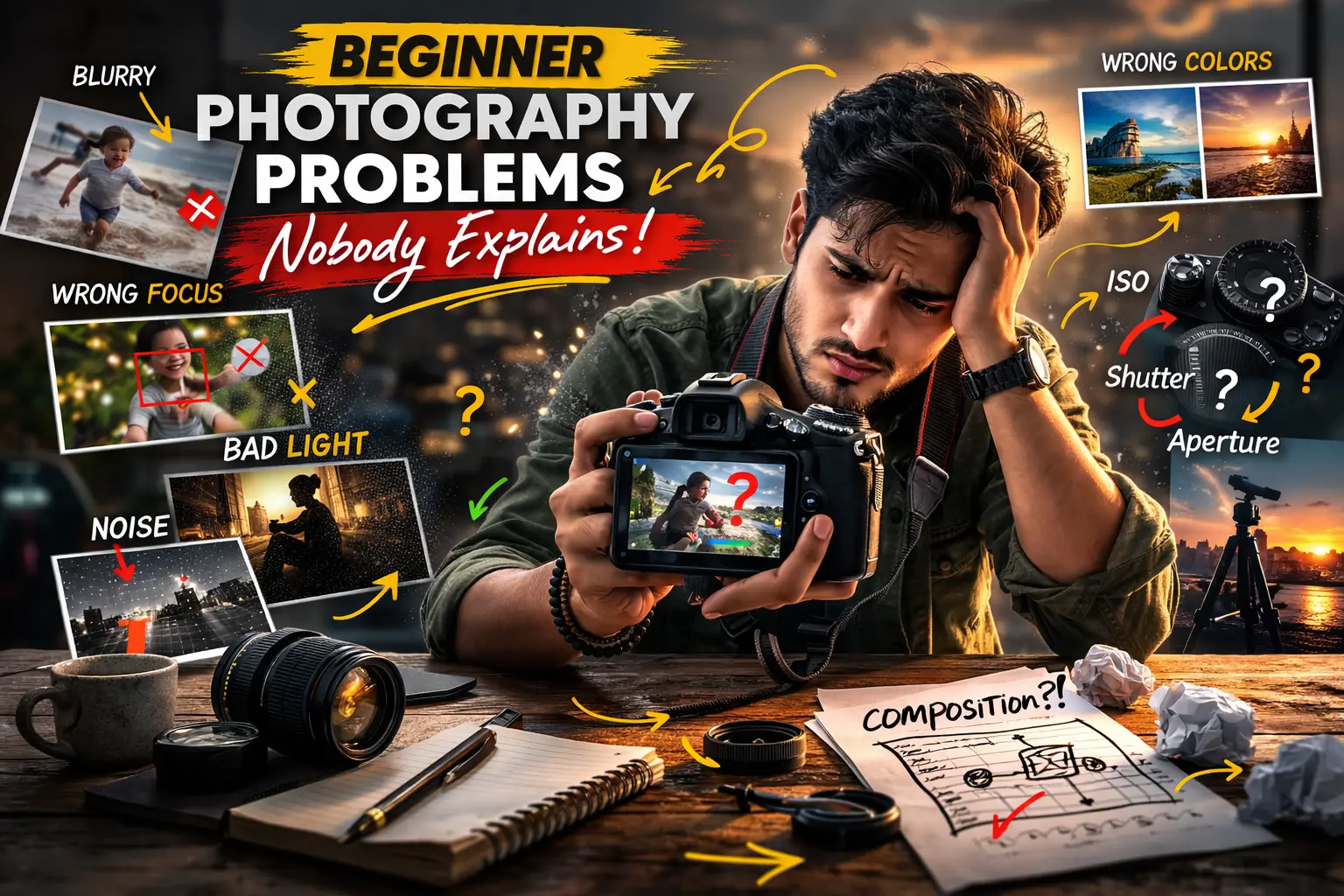
Beginner Photography Problems Nobody Explains Properly
If you’re new to photography, chances are you’ve already asked yourself:
“Why don’t my photos look like the ones I see online—even with a good camera?”
Here’s the truth: beginner photography problems are rarely about camera price or megapixels. Most beginners struggle with small but critical things that almost nobody explains clearly. This article is written to fix exactly that—no technical overload, no unrealistic advice, just real solutions that actually work.
1. “My Photos Are Blurry” – Even When I’m Not Moving
Most beginners think blur only happens if hands shake. That’s only half the story.
What’s really happening:
-
Shutter speed is too slow
-
Autofocus locked on the wrong subject
-
Camera moved slightly during exposure
Simple fix that works:
-
Keep shutter speed at least 1/125 for people
-
Use Single Point Autofocus instead of Auto
-
Hold your breath gently when pressing the shutter
👉 This alone fixes around 70% of beginner blur issues.
2. Auto Mode Isn’t “Smart” Enough (But No One Tells You)
Auto mode is designed to be safe—not creative.
The hidden problem:
Auto mode prioritizes “balanced exposure,” not mood, subject, or intention. That’s why photos often look flat and boring.
What to do instead:
-
Use Aperture Priority (A / Av mode)
-
Control background blur yourself
-
Let the camera handle the rest
This one change instantly improves portraits and everyday shots.
3. Colors Look Wrong Compared to What Your Eyes Saw
You remember warm sunlight, but the photo looks cold or green.
Why this happens:
-
Wrong White Balance
-
Mixed lighting (sun + bulb)
-
Camera guessing incorrectly
Beginner-friendly solution:
-
Set White Balance to Daylight / Cloudy / Tungsten
-
Avoid mixing different light sources
-
Don’t trust Auto White Balance indoors
This makes photos look natural, not artificial.
4. Using Flash Makes Photos Worse (So Beginners Stop Using It)
Built-in flash is harsh—and yes, it usually ruins photos.
The real issue:
Flash fires straight at faces, killing shadows and texture.
Better beginner approach:
-
Increase ISO instead of flash
-
Move closer to a window
-
Use flash only as last support, not main light
Natural light almost always looks better.
5. “My Photos Are Technically Correct, But Still Look Bad”
This is the most confusing problem—and the most common.
What’s missing:
Composition.
Not settings. Not gear. Composition.
Easy composition rules beginners can actually use:
-
Keep one clear subject
-
Don’t place subjects dead center every time
-
Check the background before clicking
Before pressing the shutter, ask:
👉 “What is this photo actually about?”
6. Low Light = Grainy Photos (And Beginners Feel Stuck)
Noise scares beginners because everyone online says “keep ISO low.”
Reality check:
A noisy photo is better than a blurry photo.
Practical rule:
-
Increase ISO if light is low
-
Accept a little grain
-
Sharp photo > clean but useless photo
Modern cameras handle noise better than you think.
7. Expecting Instant Results Kills Motivation
This problem isn’t technical—it’s mental.
You compare your Day 7 photos with someone else’s 7-year journey.
Healthy beginner mindset:
-
Improvement comes in weeks, not days
-
Bad photos are part of learning
-
Every failed shot teaches something
Photography is a skill, not a filter.
Final Advice for Beginners (That Actually Helps)
If you remember only three things from this article, remember these:
-
Light matters more than camera
-
Blur ruins photos faster than noise
-
One clear subject beats complex settings
Master these basics, and your photos will improve—without expensive upgrades.
Want More Practical Camera Help?
At camerapricebd.com, we focus on real-world photography problems, honest camera advice, and beginner-friendly solutions—especially for photographers in Bangladesh.
If you found this helpful, bookmark the site and keep learning.
Also Read: Memory Card Error in Camera? Don’t Panic – Easy Fixes That Actually Work
Also Read: Camera Not Focusing? 7 Real Reasons & Solutions (Fix It in Minutes)